
Education
Do Peptides Expire?
Published Jul 13, 2026
Do peptides expire? Learn how storage conditions, handling, and expiration dates may affect peptide stability and why proper storage is important for maintaining product quality.
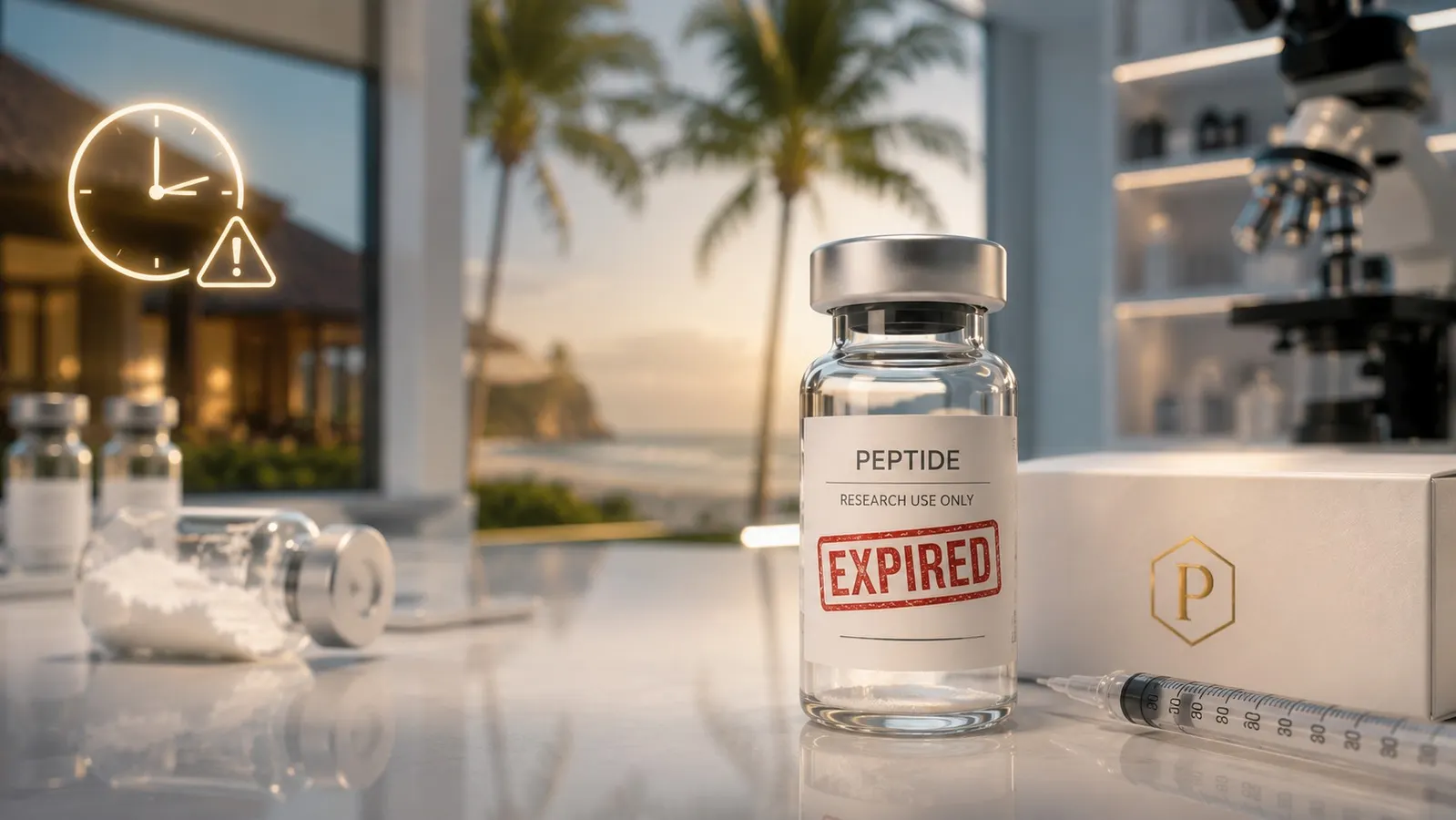
As peptides continue gaining attention in wellness, longevity, and scientific research, many first-time buyers ask a simple but important question:
Do peptides expire?
The short answer is yes.
Like many biological compounds, peptides have a limited shelf life. Over time, they may gradually lose stability depending on factors such as manufacturing quality, storage conditions, packaging, and whether the product has been prepared for use.
Understanding how peptide stability works can help you make more informed purchasing and storage decisions while avoiding unnecessary waste.
Why Do Peptides Have an Expiration Date?
Expiration dates are not simply printed for administrative purposes.
Manufacturers establish expiration dates to indicate the period during which a product is expected to maintain its quality when stored under recommended conditions.
Peptides are made from chains of amino acids, and like many biological materials, they can slowly degrade over time. Environmental factors such as heat, moisture, oxygen, and light may contribute to this natural process.
For this reason, reputable manufacturers include expiration dates based on stability testing and quality standards.
What Can Affect Peptide Stability?
Several factors may influence how well peptides maintain their quality.
Temperature
Temperature is one of the most important considerations.
Exposure to excessive heat for extended periods may reduce the stability of certain peptide products.
Following the manufacturer's storage recommendations helps preserve product quality throughout its intended shelf life.
Moisture
Moisture can contribute to degradation if products are not stored correctly.
Keeping peptide containers properly sealed helps reduce unnecessary exposure.
Light Exposure
Direct sunlight and prolonged exposure to strong light may affect the stability of some biological compounds.
Many peptide products are packaged in protective containers designed to minimize light exposure.
Air Exposure
Repeated opening of containers may increase contact with air and humidity.
Handling products carefully and minimizing unnecessary exposure supports proper storage practices.
Does Manufacturing Quality Matter?
Yes.
Quality begins long before a product reaches the customer.
Manufacturing standards, raw material quality, purification processes, packaging, and transportation all contribute to the final product's stability.
This is one reason why transparency and quality assurance are important when selecting peptide suppliers.
Can Expired Peptides Lose Effectiveness?
Manufacturers assign expiration dates because product quality may no longer be assured beyond that point.
An expired product may not maintain the same stability or characteristics expected within its labeled shelf life.
For this reason, it is generally recommended to respect manufacturer guidance and expiration dates rather than assuming a product remains unchanged indefinitely.
Why Proper Storage Is Important
Storage is often overlooked.
Even a well-manufactured product may be affected if stored outside recommended conditions.
Responsible storage helps protect product quality throughout its intended lifespan.
Always follow the storage instructions provided by the manufacturer or supplier.
A Simple Storage Checklist
When storing peptide products, consider these questions:
Is the product being stored according to the manufacturer's recommendations?
Following official storage guidance helps maintain quality.
Is the packaging intact?
Damaged or compromised packaging may expose products to moisture or environmental conditions.
Is the expiration date still valid?
Checking expiration dates before use is a simple but important habit.
Has the product been exposed to unnecessary heat or direct sunlight?
Keeping products away from excessive environmental stress supports proper storage.
Was the product obtained from a reputable supplier?
Reliable suppliers typically emphasize quality assurance, proper packaging, and transparency.
Common Myths About Peptide Expiration
Myth: If a peptide looks normal, it must still be good.
Appearance alone cannot confirm product stability or quality.
Myth: Expiration dates don't matter.
Expiration dates are established through quality and stability testing under defined storage conditions.
Myth: All peptides have the same shelf life.
Different peptides may have different stability profiles depending on their formulation and manufacturing process.
Why Education Matters
As peptide research continues to grow, so does the amount of information available online.
Unfortunately, not all of it is accurate.
Responsible education encourages people to understand how peptide quality, storage, and stability work rather than relying on assumptions or internet myths.
Being informed helps people make better decisions and appreciate the importance of quality throughout the entire product lifecycle.
Final Thoughts
Yes, peptides can expire.
Like many biological compounds, they are influenced by time, storage conditions, and manufacturing quality.
Understanding expiration dates, following recommended storage practices, and choosing transparent suppliers can help support product quality and reduce unnecessary uncertainty.
Whether you're new to peptide research or simply expanding your knowledge, learning how peptide stability works is an important part of making informed decisions.
Frequently Asked Questions
Do peptides expire?
Yes. Like many biological compounds, peptides have a limited shelf life and are supplied with manufacturer expiration dates based on stability testing.
What affects peptide stability?
Temperature, moisture, light exposure, air exposure, manufacturing quality, packaging, and storage conditions may all influence stability.
Can storage conditions matter?
Yes. Following the manufacturer's recommended storage conditions helps maintain product quality throughout its intended shelf life.
Should I ignore expiration dates?
No. Expiration dates are provided to indicate the period during which the manufacturer expects the product to maintain its intended quality under recommended storage conditions.
Disclaimer: This content is for educational purposes only and is not medical advice. Peptides and related compounds may be regulated differently depending on your country. Always speak with a qualified healthcare professional before using any peptide or health product.