
Education
Peptide Supplements: What They Are and What the Science Says
Published Aug 4, 2026
A science based guide to peptide supplements, how they differ from therapeutic peptides, what current research shows, and what consumers should know before buying.
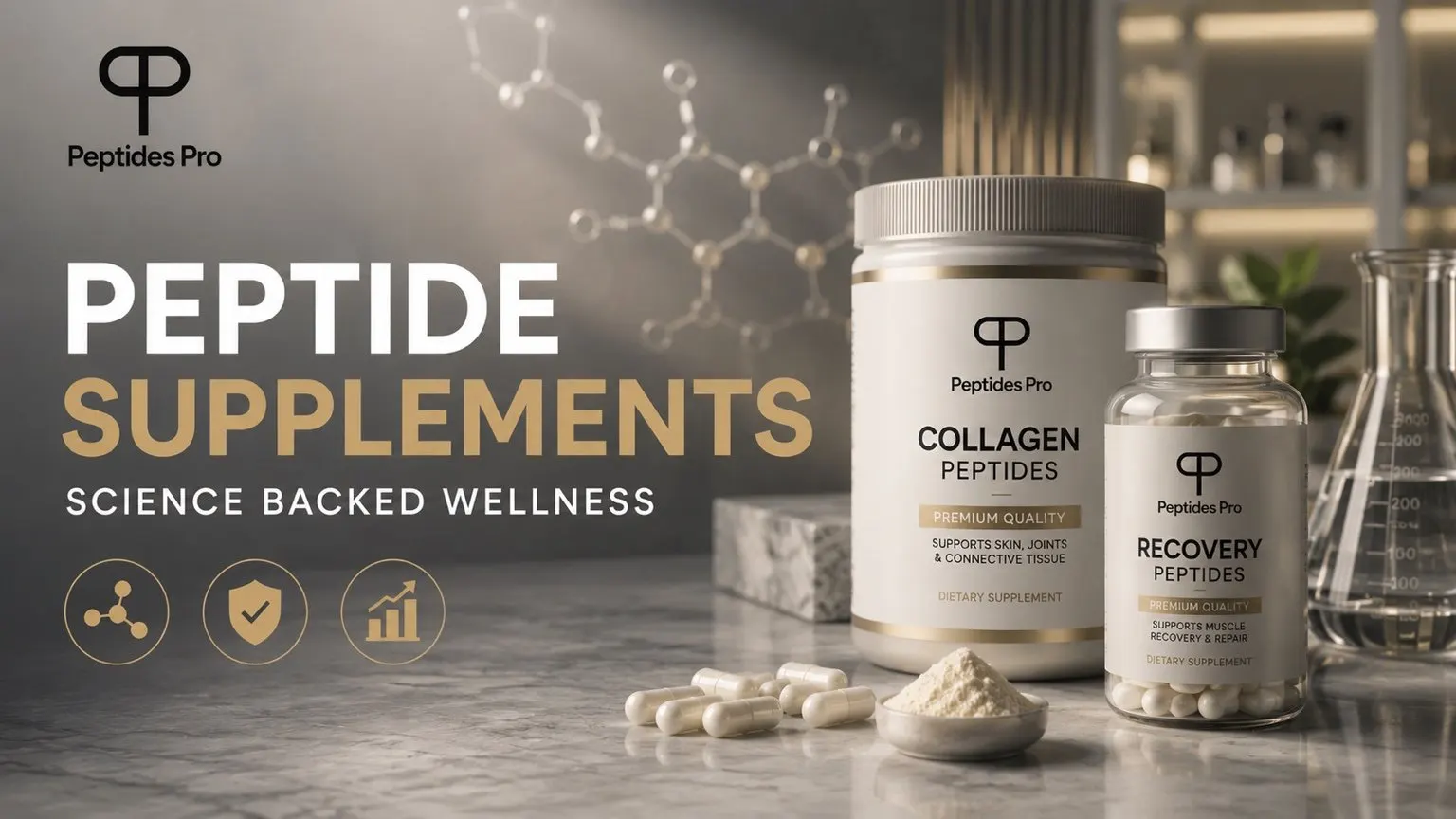
Peptide supplements have become one of the fastest growing categories in wellness, sports nutrition, and healthy ageing. From collagen powders to specialised bioactive peptides, these products are now found in health stores, online retailers, and professional wellness clinics across the world.
Despite their popularity, many people still confuse peptide supplements with prescription peptide medicines or research peptides. While both contain peptides, they are not the same products and they are not intended for the same purposes.
Understanding the difference is important for anyone interested in making informed decisions.
What Are Peptide Supplements?
Peptides are short chains of amino acids. Amino acids are the building blocks of proteins, and when several are joined together in smaller chains they form peptides.
Many peptide supplements are naturally derived from food sources including collagen, milk proteins, eggs, soy, fish, and plant proteins. During manufacturing these proteins are broken into smaller peptide fragments that may be easier for the body to absorb.
Some supplements are designed to support general nutrition while others are marketed for skin health, exercise recovery, muscle maintenance, or healthy ageing.
Unlike pharmaceutical peptides, peptide supplements are generally sold as nutritional products rather than medicines.
Not All Peptides Are The Same
One of the biggest misconceptions online is that every peptide works in the same way.
Scientists separate peptides into different categories depending on their structure and biological activity.
Examples include collagen peptides, which are widely studied for connective tissue health, and milk derived bioactive peptides that have been investigated for cardiovascular and metabolic health.
Prescription medicines such as semaglutide also belong to the peptide family, but they are highly engineered pharmaceutical compounds developed for specific medical uses. They should not be confused with over the counter peptide supplements.
What Does Research Say?
Research into peptide supplements continues to grow.
Professor David J. Jenkins has published important work on dietary proteins and metabolic health, while Professor Luc van Loon has extensively studied protein metabolism and muscle recovery through nutrition.
Collagen peptides are among the most researched nutritional peptides. Clinical studies have investigated their role in supporting skin elasticity, joint comfort, and connective tissue when combined with a balanced diet and healthy lifestyle. Results vary between individuals and research continues to evolve.
Other bioactive peptides are being explored for their potential effects on inflammation, blood pressure, antioxidant activity, and muscle protein synthesis. Many findings remain promising but scientists continue to call for larger and longer human studies before drawing stronger conclusions.
This is why reputable researchers often emphasise evidence over marketing.
Why Quality Matters
The quality of peptide supplements can differ significantly between manufacturers.
Responsible companies typically provide information about ingredient sourcing, manufacturing standards, purity testing, and independent laboratory verification.
Consumers should also pay attention to transparent ingredient lists rather than relying solely on marketing claims.
Products that promise dramatic transformations or guaranteed results should always be approached carefully.
Can Peptide Supplements Replace A Healthy Lifestyle?
No.
Current scientific evidence consistently shows that supplements work best as part of a broader lifestyle that includes balanced nutrition, regular physical activity, adequate sleep, and appropriate medical care when needed.
No supplement should be viewed as a substitute for healthy habits.
How To Choose A Peptide Supplement
When evaluating a peptide supplement, it is worth considering several factors.
Look for products manufactured according to recognised quality standards.
Check whether the company provides third party laboratory testing or certificates of analysis where appropriate.
Review the ingredient list carefully and avoid products that make unrealistic promises or claim to cure diseases.
Finally, consider whether the product is supported by published scientific evidence rather than social media trends alone.
Frequently Asked Questions
Are peptide supplements the same as peptide injections?
No. Peptide supplements and peptide medicines serve different purposes and are regulated differently in many countries.
Are collagen peptides considered peptide supplements?
Yes. Collagen peptides are one of the most widely available and extensively researched forms of peptide supplements.
Do peptide supplements have proven health benefits?
Some peptide supplements have encouraging evidence in specific areas, particularly collagen peptides. However, results depend on the product, the individual, and the quality of available research.
Should I trust products that promise rapid results?
Consumers should be cautious of products that make guaranteed or exaggerated claims. Reliable manufacturers generally present balanced information supported by scientific research.
Conclusion
Peptide supplements represent an exciting area of nutritional science, but they should be understood for what they are rather than what marketing sometimes suggests.
Current evidence supports the potential of certain peptide supplements, particularly collagen peptides and several naturally occurring bioactive peptides. At the same time, researchers continue to investigate many newer products to better understand their long term effects and practical applications.
Choosing products supported by quality research, transparent manufacturing, and realistic expectations remains the most sensible approach.
Disclaimer
This article is intended for educational purposes only and should not be considered medical advice. Peptide supplements are not intended to diagnose, treat, cure, or prevent disease. Readers should consult a qualified healthcare professional before making decisions regarding supplements or medical treatment.