
Education
Peptides and Performance: What Athletes and Busy Professionals Should Know
Published Jul 11, 2026
Peak performance doesn't happen by chance. Learn what current research says about peptides, recovery, and athletic performance while separating scientific evidence from marketing hype.
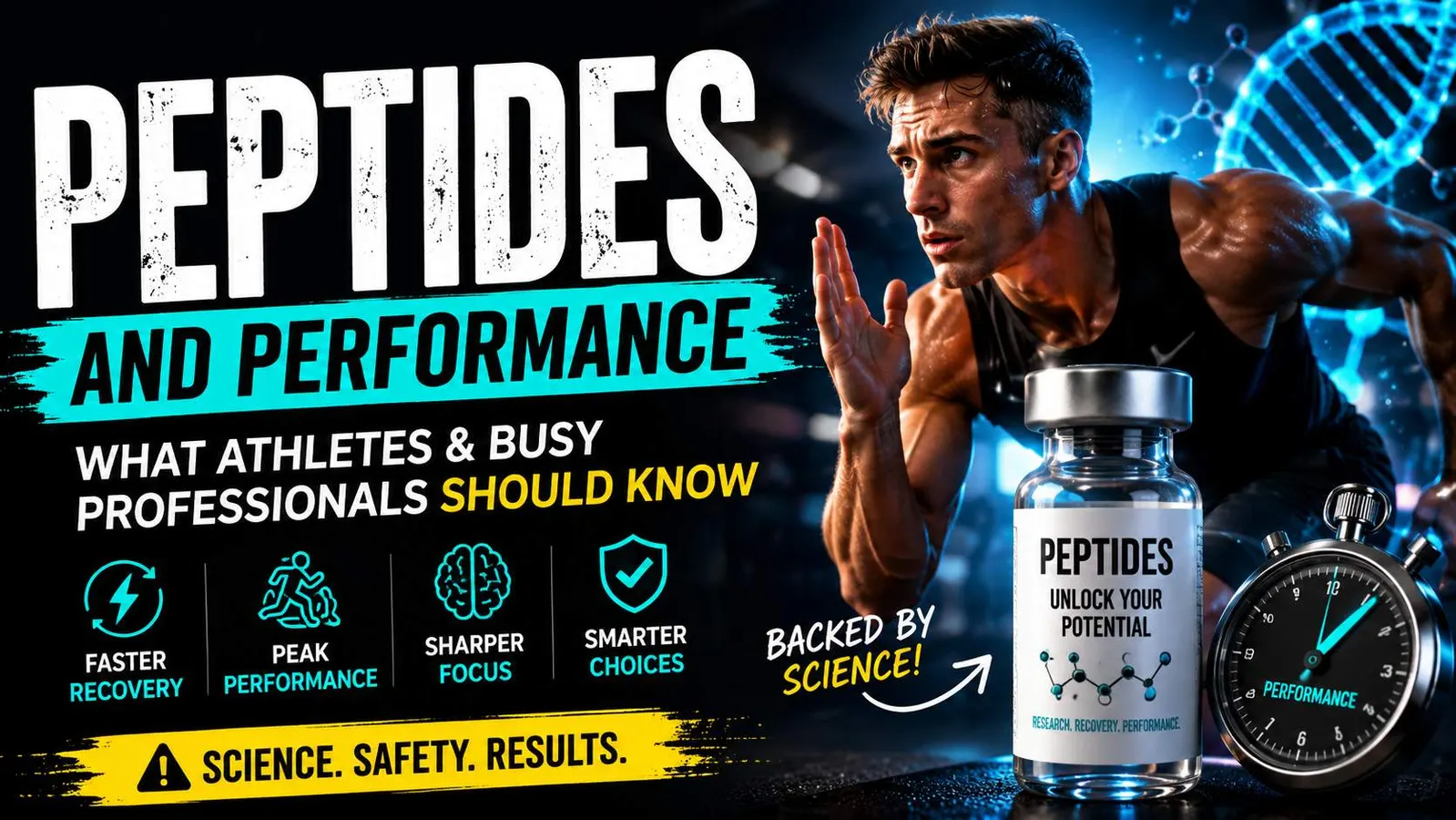
Performance means different things to different people. For an athlete, it might be running faster, recovering after intense training, or staying consistent throughout a long season. For a busy professional, performance could mean having enough energy to get through demanding workdays, staying mentally focused during meetings, or balancing work, family, and personal health without feeling constantly exhausted.
As conversations around health and longevity continue to grow, peptides have become an increasingly popular topic. They're often mentioned alongside fitness, recovery, productivity, and healthy aging, leading many people to wonder whether peptides really have a place in improving performance.
The answer isn't as simple as many online discussions make it seem.
Understanding Performance
Performance is about much more than physical strength. It includes how your body and mind function throughout the day.
Good performance depends on several factors working together. Sleep quality, nutrition, regular exercise, hydration, stress management, and overall health all influence how well someone performs, whether they're competing in sports or working behind a desk.
Many people spend time looking for shortcuts while overlooking these fundamentals, even though they're supported by decades of scientific research.
Where Peptides Enter the Conversation
Peptides are naturally occurring chains of amino acids that help the body regulate many biological processes. Scientists have been studying different peptides for years because of the roles they play in communication between cells, metabolism, tissue repair, and hormone regulation.
As research has expanded, peptides have attracted attention from people interested in improving recovery, maintaining physical performance, and supporting overall wellness.
It's important to understand, however, that peptides are not one single product. The term "peptide" describes a large group of compounds, each with different functions, different levels of scientific evidence, and different areas of research.
Why So Many People Are Interested
The growing popularity of peptides isn't limited to professional athletes anymore.
Business owners, healthcare workers, entrepreneurs, executives, shift workers, and anyone with demanding schedules are becoming increasingly interested in ways to maintain consistent energy and recover more effectively from both physical and mental stress.
This growing interest has helped fuel online discussions, podcasts, wellness communities, and social media content focused on peptides.
At the same time, popularity should never be confused with scientific proof.
What Does the Research Actually Say?
Researchers continue to investigate how different peptides interact with biological systems involved in recovery, metabolism, hormone signaling, and cellular repair.
Some peptide-based medicines have established medical uses, while many others remain under investigation.
Because research is still evolving, the amount of evidence varies significantly depending on the specific peptide being studied.
This is one reason experts encourage people to be cautious when they encounter broad claims suggesting that peptides can dramatically improve every aspect of performance.
Science rarely works that way.
Recovery and Performance Go Hand in Hand
One lesson that continues to appear throughout sports science is that better recovery often leads to better performance.
Recovery allows the body to repair itself, adapt to training, restore energy, and prepare for future demands.
Without proper recovery, even the best training programs become less effective over time.
This applies just as much to someone preparing for a marathon as it does to someone working sixty-hour weeks while trying to stay healthy.
Performance isn't only about pushing harder. Sometimes it's about recovering better.
The Risk of Online Hype
One challenge with today's wellness industry is that information spreads much faster than scientific research.
Social media often highlights dramatic success stories while leaving out important details such as study limitations, individual differences, or ongoing research.
It's common to see headlines promising rapid transformations or portraying peptides as a solution for every performance goal.
These claims deserve healthy skepticism.
Reliable health information should always be based on scientific evidence rather than viral trends or personal testimonials alone.
Every Person Is Different
There is no universal approach to improving performance.
Age, lifestyle, genetics, sleep quality, nutrition, training history, stress levels, and existing health conditions all influence how someone performs and recovers.
What works well for one individual may not produce the same outcome for another.
That is why healthcare professionals generally recommend looking at the whole picture instead of relying on a single product or trend.
Don't Forget the Fundamentals
It's easy to become interested in new developments like peptides, but the biggest improvements in performance often come from consistently practicing the basics.
Getting enough quality sleep, eating a balanced diet, staying physically active, managing stress, and allowing adequate time for recovery continue to be among the most reliable ways to support both physical and mental performance.
These habits may not be as exciting as the latest wellness trend, but they remain the strongest foundation for long-term health.
Looking Ahead
Interest in peptides will likely continue to grow as researchers learn more about how they influence the body's natural processes.
Advances in biotechnology and medical research are helping scientists better understand where peptides may have meaningful applications and where more evidence is still needed.
As new discoveries emerge, it's likely that public understanding will continue to improve as well.
Important Disclaimer
This article is intended for educational and informational purposes only. It should not be considered medical advice or a recommendation to use any peptide or health treatment. Peptide research is ongoing, and anyone considering a medical or wellness intervention should seek advice from a qualified healthcare professional.
Final Thoughts
Performance isn't built on one supplement, one workout, or one breakthrough discovery. It's the result of consistent habits, informed choices, and understanding how the body works over time.
Peptides have become an exciting area of scientific research, and there is genuine interest in understanding their potential. At the same time, the science is still developing, and it's important to separate evidence from marketing.
Whether you're an athlete chasing your next personal best or a professional simply trying to feel healthier and more productive, the best approach is to stay curious, ask questions, and make decisions based on reliable information rather than hype.