
Skin Health
Peptides for Skin Health: What Concerns May They Support?
Published Jun 29, 2026
Peptides appear across skincare and aesthetic medicine. Here's a clear, evidence-grounded look at what the science actually says about peptides and skin health.
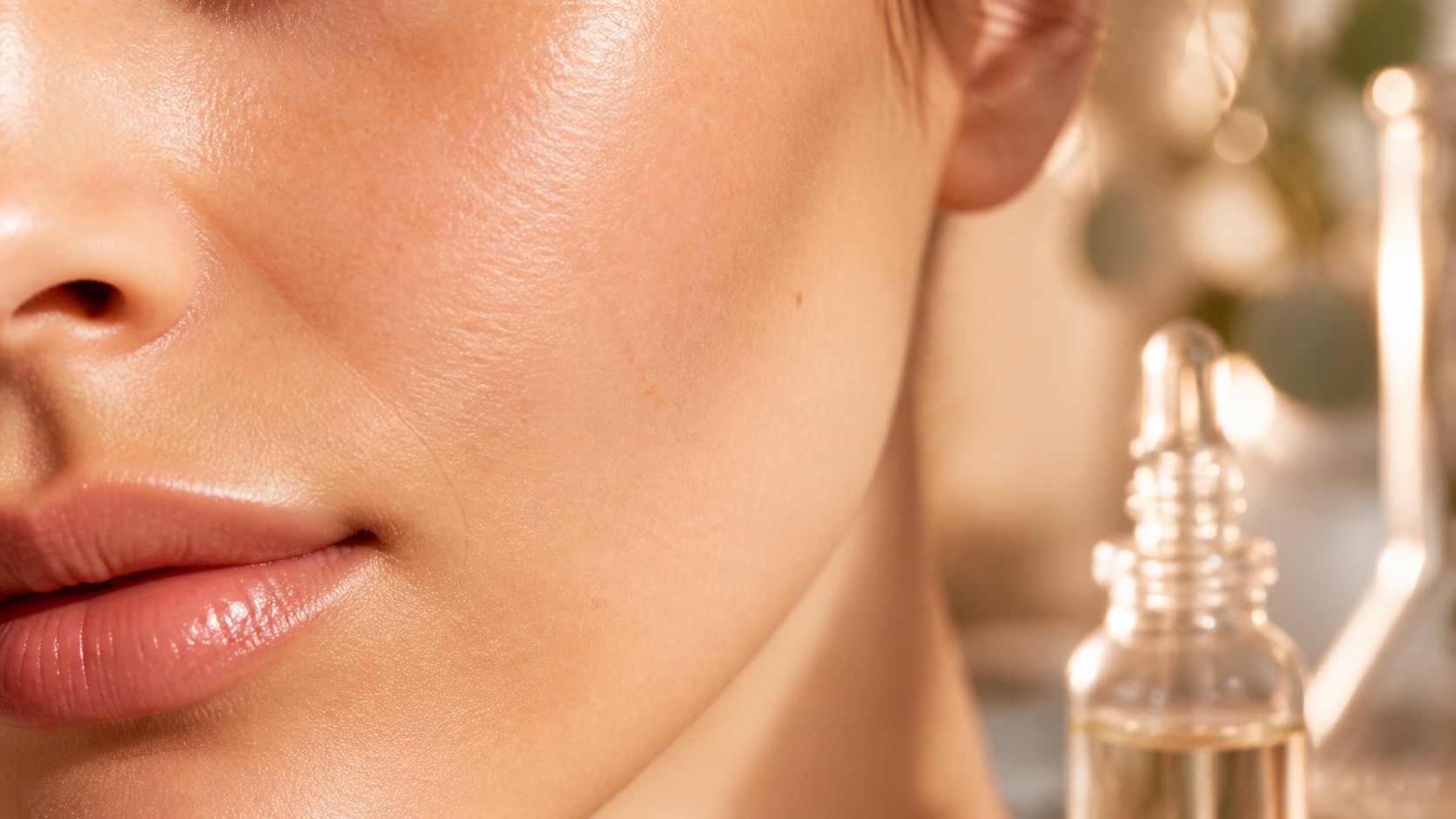
Walk into almost any premium skincare store today and you will encounter the word "peptides" on labels, in ingredient lists, and in marketing language that ranges from careful to breathless. The same word appears in aesthetic medicine conversations, dermatology offices, and — increasingly — in discussions about injectable compounds for skin rejuvenation.
Peptides are genuinely relevant to skin health. The biology supports it. But the evidence is not uniform across all applications, all compounds, or all delivery methods — and the difference between a well-formulated topical peptide serum and an unregulated injectable peptide protocol is larger than most marketing language acknowledges.
This article gives a clear, evidence-grounded overview of where peptide science and skin health intersect, what the research suggests, and what still needs more careful evaluation.
Key Takeaways
- Peptides play real biological roles in skin structure, collagen production, and wound healing — this is well established.
- Topical peptide skincare has a developed evidence base for some applications, particularly around collagen signaling and barrier function.
- The evidence for injectable peptides used specifically for cosmetic skin purposes is less standardized and warrants more caution.
- Skin health is multifactorial: sun protection, sleep, nutrition, and hydration have strong evidence and should form the foundation.
- Peptides do not "fix" skin conditions. At best, certain compounds may support skin function, and individual results vary significantly.
Why Skin and Peptides Are Biologically Connected
Skin is a complex, living organ — and peptides are part of the language it uses to regulate itself.
Collagen, the structural protein that gives skin its firmness and elasticity, is produced by skin cells called fibroblasts. As we age, collagen production slows and the structural quality of existing collagen degrades. This process drives many of the visible changes associated with aging skin: reduced elasticity, fine lines, and changes in texture.
Signal peptides — short amino acid sequences — can interact with fibroblasts and influence their behavior. Some peptides have been studied for their ability to stimulate collagen synthesis. Others have been explored for their role in regulating enzymes that break down collagen. Still others are studied for antimicrobial properties, wound healing support, or effects on the skin barrier.
Research published in PMC (including dermatology-focused peptide literature) has explored peptide mechanisms in skin biology at a cellular level, including roles in wound healing, collagen remodeling, and barrier defense. This is not marketing language — it reflects genuine scientific interest in peptide-skin biology.
The Landscape of Skincare Peptides
Peptides in skincare are not a monolith. Several distinct categories exist, each with different mechanisms and evidence profiles.
Signal Peptides
Signal peptides communicate with skin cells and may influence collagen production. Matrixyl (palmitoyl pentapeptide-4) is perhaps the most studied commercially — it has been researched in the context of wrinkle reduction and collagen stimulation, with some peer-reviewed data supporting its activity. The evidence is not as robust as clinical pharmaceutical studies, but it is more developed than for many compounds in the broader peptide conversation.
Carrier Peptides
Carrier peptides are designed to deliver trace elements — particularly copper — into the skin. GHK-Cu (copper peptide) is the most widely discussed example. It has been studied for roles in tissue repair, collagen and elastin synthesis, and wound healing. The skin research around GHK-Cu is reasonably developed, particularly for topical applications, though claims about its anti-aging effects require careful reading of what the evidence actually supports.
Neurotransmitter-Inhibiting Peptides
Compounds like argireline (acetyl hexapeptide-3) are marketed as topical alternatives to injectable neuromodulators. The mechanism — inhibiting muscle contraction locally — has some evidence behind it, but the effect size in topical application is generally more limited than injectable neuromodulators, and evidence in clinical settings is mixed.
Antimicrobial Peptides
Research published in PMC has examined antimicrobial peptides in wound healing contexts, with evidence suggesting roles in infection defense and tissue repair. This is an area of active research with genuine biological interest — antimicrobial peptides are part of the skin's innate immune system and are studied in wound care contexts.
Topical vs. Injectable: A Critical Distinction
This distinction matters enormously and is often blurred in public discussion.
Topical skincare peptides are applied to the skin surface. Their absorption through the skin barrier is limited by the barrier's design — the outer layers of skin exist partly to prevent penetration of external compounds. Topical peptides are formulated to work within these constraints. They have a long cosmetic safety record, are widely commercially available, and are regulated as cosmetic ingredients in most countries. Evidence for some topical peptide formulations in skin function is reasonably developed.
Injectable peptides for cosmetic skin purposes — administered under the skin or intradermally — bypass the skin barrier entirely. This is a fundamentally different situation in terms of absorption, systemic exposure, regulatory status, and risk profile. Injectable compounds must be sterile. Their source and manufacturing standards matter significantly. In most countries, injectable compounds used for cosmetic purposes require medical supervision.
The same compound may exist in both a topical serum and as an injectable — but they are not equivalent products and should not be treated as such.
What Peptides Probably Cannot Do for Skin
Part of responsible skin health education is being honest about limitations.
Peptides do not reverse aging. They do not rebuild skin structure from scratch. They do not treat skin diseases. The most evidence-supported topical peptides may support collagen signaling, improve certain aspects of skin texture or firmness over time, and contribute to barrier function — but these are modest, supportive roles, not transformations.
Claims that any skincare ingredient will dramatically reverse aging, restore youthful skin to its previous state, or treat dermatological conditions should be evaluated skeptically regardless of the mechanism proposed.
For people dealing with specific skin conditions — acne, eczema, rosacea, hyperpigmentation — the appropriate starting point is a dermatologist, not a peptide vendor.
What the Evidence Suggests May Be Supported
With appropriately cautious language, here is what some research suggests peptides may support in a skin health context:
- Collagen and elastin synthesis signaling, particularly with compounds like matrixyl and GHK-Cu, may be supported by some peptides when applied topically.
- Skin barrier integrity and hydration may be supported by certain peptide formulations, though evidence varies by product formulation and ingredient quality.
- Wound healing processes at a cellular level involve peptide signaling — this is established biology, and some wound care applications reflect it.
- Antimicrobial defense in skin involves naturally occurring peptides — research in this area is active and has clinical relevance in wound care contexts.
None of these statements should be read as "peptides cure skin problems." They represent areas where scientific interest and early-to-moderate evidence intersect.
Building a Skin Health Foundation First
Before any peptide-related skincare intervention, the evidence-based foundations of skin health are worth establishing: consistent broad-spectrum sun protection, adequate hydration, nutrition that supports skin repair (adequate protein, antioxidants, healthy fats), quality sleep, and avoiding smoking and excess alcohol. These factors have robust evidence and their cumulative effect on skin health significantly outweighs any topical ingredient.
Peptide skincare is best understood as a layer on top of this foundation — not a replacement for it.
For more on specific peptide compounds relevant to skin, see the Peptides Pro Global blog articles on GHK-Cu and copper peptides. If you have specific skin concerns, the right first call is a dermatologist. And if you want to explore peptide options with professional guidance, the Consultation page is available.
FAQ
Do peptides actually work in skincare? Some topical peptide ingredients have evidence supporting their role in skin function, particularly around collagen signaling and barrier support. Evidence quality varies by compound and formulation. No topical peptide has been proven to dramatically reverse aging.
What is the difference between peptides in skincare and injectable peptides for skin? Very significant. Topical peptides have a cosmetic safety record and operate within the skin barrier's constraints. Injectable peptides bypass the barrier, have a different risk profile, require sterility and medical-grade manufacturing, and should involve medical supervision.
Can peptides help with acne or rosacea? Some antimicrobial peptide research has explored roles in skin defense relevant to acne and inflammation. However, treating skin conditions should begin with a dermatologist — not a peptide protocol.
Is GHK-Cu the most studied skincare peptide? It is among the more studied in terms of academic literature. Matrixyl (palmitoyl pentapeptide-4) also has a developed cosmetic evidence base. Evidence varies significantly between compounds.
How do I choose a quality peptide skincare product? Look for products from reputable manufacturers, with ingredient lists that specify the peptide compound, at concentrations and formulations supported by evidence. Dermatologist-reviewed product lines tend to have more rigorous quality standards.
References
- PMC: Peptides in Dermatology and Skin Health — https://pmc.ncbi.nlm.nih.gov/articles/PMC11762834/
- PMC: Antimicrobial Peptides and Wound Healing — https://pmc.ncbi.nlm.nih.gov/articles/PMC12650420/
- Health.com: What Are Peptides in Skincare? — https://www.health.com/beauty/skincare/what-are-peptides
- Nature / Signal Transduction and Targeted Therapy: Advances in Peptide-Based Drug Development — https://www.nature.com/articles/s41392-024-02107-5
Disclaimer: This article is for educational and informational purposes only. It does not constitute medical advice, diagnosis, or treatment. Peptides do not diagnose, treat, cure, or prevent any skin condition or disease. Always speak with a qualified healthcare professional or dermatologist before using peptides or making decisions about your skin health.