
Peptide Basics
What Are Peptides? The Simple Explanation Behind the Global Hype
Published Jul 4, 2026
Peptides are everywhere — in skincare, medicine, biohacking, and podcasts. Here's a clear, honest explanation of what they actually are and why the buzz exists.
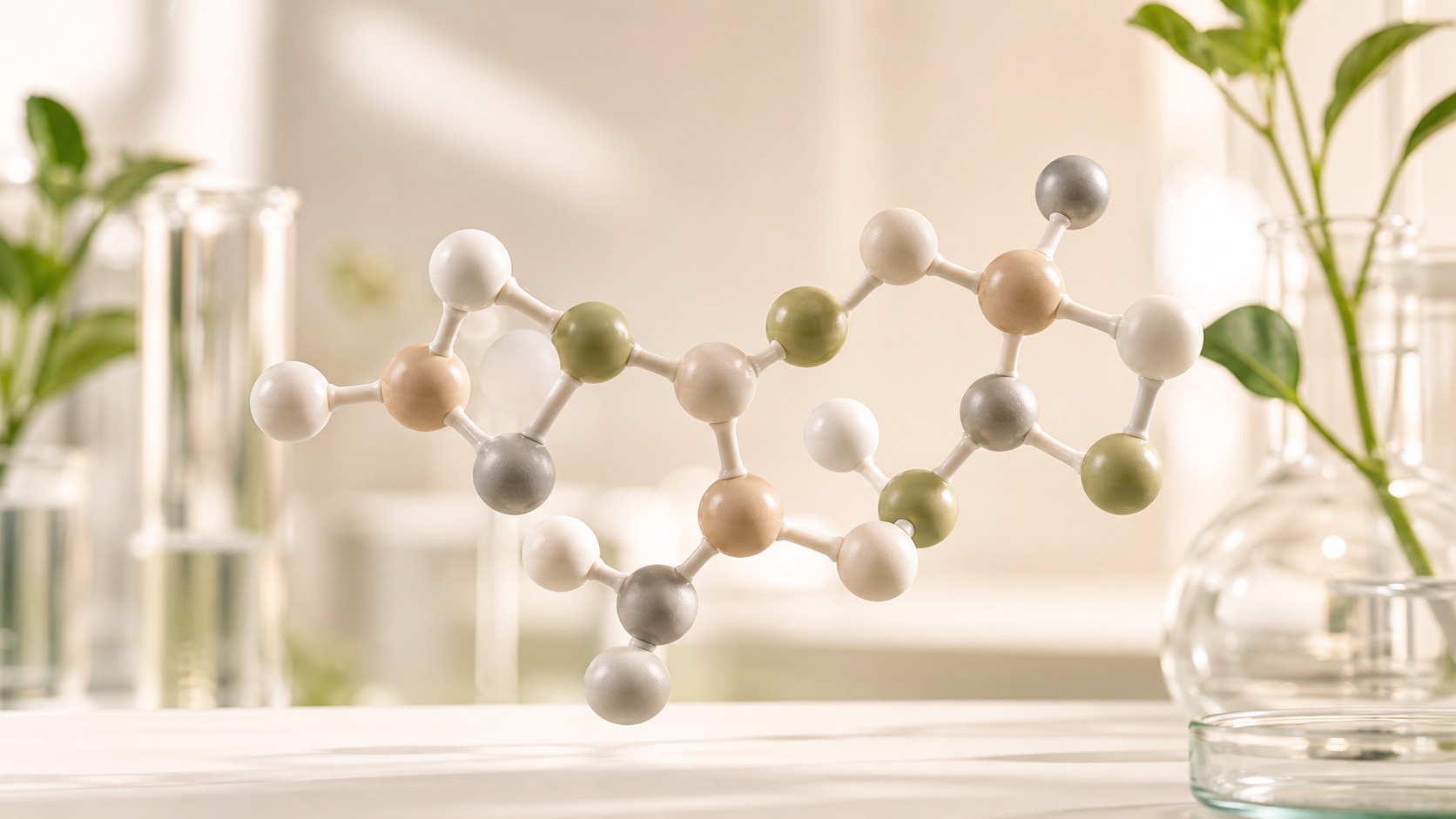
You have heard the word peptides in a podcast. Seen it on a skincare label. Read it in a Reddit thread at midnight when you couldn't sleep. Your gym friend swears by them. Your dermatologist mentioned them offhand. A longevity influencer on YouTube dedicated an hour-long episode to them.
So what actually are peptides? And why is this word suddenly everywhere?
This article exists to answer that simply and honestly — without hype, without medical advice, and without the kind of oversimplification that leaves you more confused than before you started.
Key Takeaways
- Peptides are short chains of amino acids — the same building blocks that make up proteins.
- They occur naturally throughout the human body and play a wide range of signaling roles.
- The word "peptide" covers an enormous range: from everyday food molecules to pharmaceutical drugs.
- Not all peptides are the same, and the category is too broad to make universal claims about.
- The global conversation about peptides sits at the intersection of medicine, biohacking, beauty, and performance — which is exactly why it can feel overwhelming.
Start With the Science (But Keep It Simple)
A peptide is a short chain of amino acids linked together by what chemists call peptide bonds. Amino acids are the basic units the body uses to build proteins — and when you string a small number of them together (typically fewer than 50), the result is a peptide. Chain more together and you get a protein.
That distinction matters more than it might seem. Because of their smaller size, peptides can behave differently from full proteins. They are often easier for the body to absorb. They can be designed or synthesized to carry specific signals. And they can interact with cell receptors in ways that larger proteins cannot always replicate.
Here is something that tends to surprise people: peptides are not exotic or new. Your body produces them constantly. Hormones like insulin are peptides. Many neurotransmitters involve peptide structures. Collagen — the protein responsible for skin elasticity and joint structure — is built from amino acid sequences that peptides help regulate and maintain. The digestive system produces peptide hormones. Even the act of digesting a piece of chicken produces peptide fragments as the protein breaks down.
Peptides are, in a very real sense, part of the basic operating language of the human body.
Why Is the Word Suddenly Everywhere?
If peptides are so fundamental, why does the term feel new?
The short answer is that several very different things are happening at once — and they all happen to share the same vocabulary.
Skincare. The cosmetic industry has been using peptide-based ingredients for years. GHK-Cu (copper peptide), matrixyl, and similar compounds appear in serums and moisturizers marketed for anti-aging and skin barrier support. When skincare brands spotted the clinical-sounding appeal of "peptides," the word moved into mainstream beauty culture.
Pharmaceutical medicine. GLP-1 receptor agonists — drugs like semaglutide and tirzepatide, sold under brand names including Ozempic and Mounjaro — are peptide-based medications. As weight loss drugs became a global conversation, peptides entered health news coverage at a level they had never seen before. A review published in Signal Transduction and Targeted Therapy (2024) describes peptide-based drugs as one of the fastest-growing categories in pharmaceutical development.
Biohacking and performance communities. Compounds like BPC-157, TB-500, and CJC-1295 have circulated in online fitness and recovery communities for years. As biohacking culture went mainstream — through podcasts, YouTube channels, and Reddit forums — these discussions reached audiences far beyond niche supplement groups.
Longevity research. Researchers and clinicians interested in aging, cellular repair, and metabolic health have increasingly looked at peptide-related compounds. This has attracted both serious scientific interest and a significant amount of commercial speculation.
These four conversations — beauty, medicine, biohacking, longevity — are all happening simultaneously and all using the word "peptides." No wonder the Reddit ELI5 thread asking "what is a peptide and why are there so many posts about them?" has generated so much engagement. The confusion is entirely understandable.
The Spectrum of Peptides Is Huge
This is the nuance that most social media coverage misses: "peptides" is not one thing. It is a category so broad that it includes FDA-approved medications with decades of clinical data, experimental research compounds being studied in labs, cosmetic ingredients in your serum, and naturally occurring fragments from the food you eat.
Saying "peptides are good for you" or "peptides are dangerous" is a bit like saying "chemicals are good for you" — it is technically true and practically meaningless. What matters is the specific compound, the dose, the delivery method, the evidence base, the source, the regulatory context, and the person using it.
That is why the smarter question is never "are peptides worth it?" but rather: which peptide, in what context, supported by what evidence, and for what purpose?
What Peptides Are Not
Because the word is being used so loosely, it helps to clear up some common misunderstandings.
Peptides are not a single drug or compound. They are not a supplement category in the way that vitamins are. They are not automatically safe because they are "natural" — some peptides are biologically active in significant ways. And they are not automatically dangerous simply because they are injectable or experimental.
The category includes products sold over the counter in pharmacies, prescription medications, compounds available only through licensed compounding pharmacies, and products sold online as "research chemicals" with little to no regulatory oversight. These are profoundly different situations.
Why This Matters More Than Ever
The global interest in peptides is not going away. If anything, it is accelerating. Pharmaceutical companies are investing in peptide-based drug development at a scale not seen before. Longevity clinics are fielding more questions about peptide protocols. Skincare brands are formulating new peptide products. And people who heard one episode of a podcast are making health decisions based on incomplete information.
That combination — genuine scientific progress plus enormous commercial interest plus limited public literacy — is a recipe for confusion. And confusion tends to benefit either hype or fear, neither of which helps anyone.
The goal of Peptides Pro Global is to occupy the space in between: curious, evidence-informed, commercially aware, and honest about what is known, what is still being studied, and what remains genuinely uncertain.
What to Read Next
If you're trying to understand whether peptides are relevant to your life specifically, the next step is understanding who the primary audiences for peptides actually are — and whether you fit one of them. Start with Who Are Peptides For? on the Peptides Pro Global blog.
If you're further along and thinking about whether to explore peptide-related options for yourself, the FAQ and Consultation pages are good next steps. And if you want to browse the broader landscape, the Peptides Pro Global blog covers everything from skin science to safety to longevity culture.
FAQ
Is a peptide the same as a protein? No. Peptides are short chains of amino acids — typically fewer than 50. Proteins are longer chains. The distinction affects how each behaves in the body and how they can be used clinically or cosmetically.
Are peptides natural or synthetic? Both. Many peptides occur naturally in the body and in food. Others are synthesized in labs — either to replicate naturally occurring compounds or to create novel sequences designed for specific effects.
Are peptides safe? This depends entirely on the specific compound, the source, the method of use, and the individual. Some peptides are in FDA-approved medications with strong safety profiles. Others are experimental compounds with very limited human data. "Peptides" as a category cannot be uniformly declared safe or unsafe.
Do peptides really work for skin? Some peptide ingredients have evidence supporting their role in skin health, particularly around collagen and barrier function. The evidence varies by compound and formulation. The Peptides Pro Global blog covers this in dedicated skin health articles.
Why are so many peptides injected? Some peptides are degraded by digestive enzymes when taken orally, meaning they do not reach the bloodstream in meaningful concentrations. Injection bypasses digestion. This does not make all peptides injectable — many skincare peptides are topical, and some oral formulations are being studied.
References
- Reddit ELI5: What is a peptide and why are there so many posts about them? — https://www.reddit.com/r/explainlikeimfive/comments/1qw0fv6/eli5_what_is_a_peptide_and_why_are_there_so_many/
- Health.com: What Are Peptides? — https://www.health.com/what-are-peptides-7106093
- Nature / Signal Transduction and Targeted Therapy: Advances in peptide-based drug development — https://www.nature.com/articles/s41392-024-02107-5
- Huberman Lab: Peptides — The Science, Uses & Safety — https://www.youtube.com/watch?v=_DfqnpSbMfE
- Paul Saladino: Peptides Explained — https://www.youtube.com/watch?v=LsfLAI6qBzY
Disclaimer: This article is for educational and informational purposes only. It does not constitute medical advice, diagnosis, or treatment. Peptides, injectable compounds, prescription medications, and health products may carry risks and may be regulated differently depending on your country. Always speak with a qualified healthcare professional before using peptides or making health-related decisions.