
Education
What Is BAC Water? Everything You Need to Know Before Mixing Your First Peptide
Published Jul 7, 2026
BAC water is the non-negotiable starting point for any peptide reconstitution. Two ingredients — pharmaceutical-grade sterile water and 0.9% benzyl alcohol — give you a carrier that protects your peptide from contamination across multiple draws over 28 days. It's not an accessory. It's the foundation.
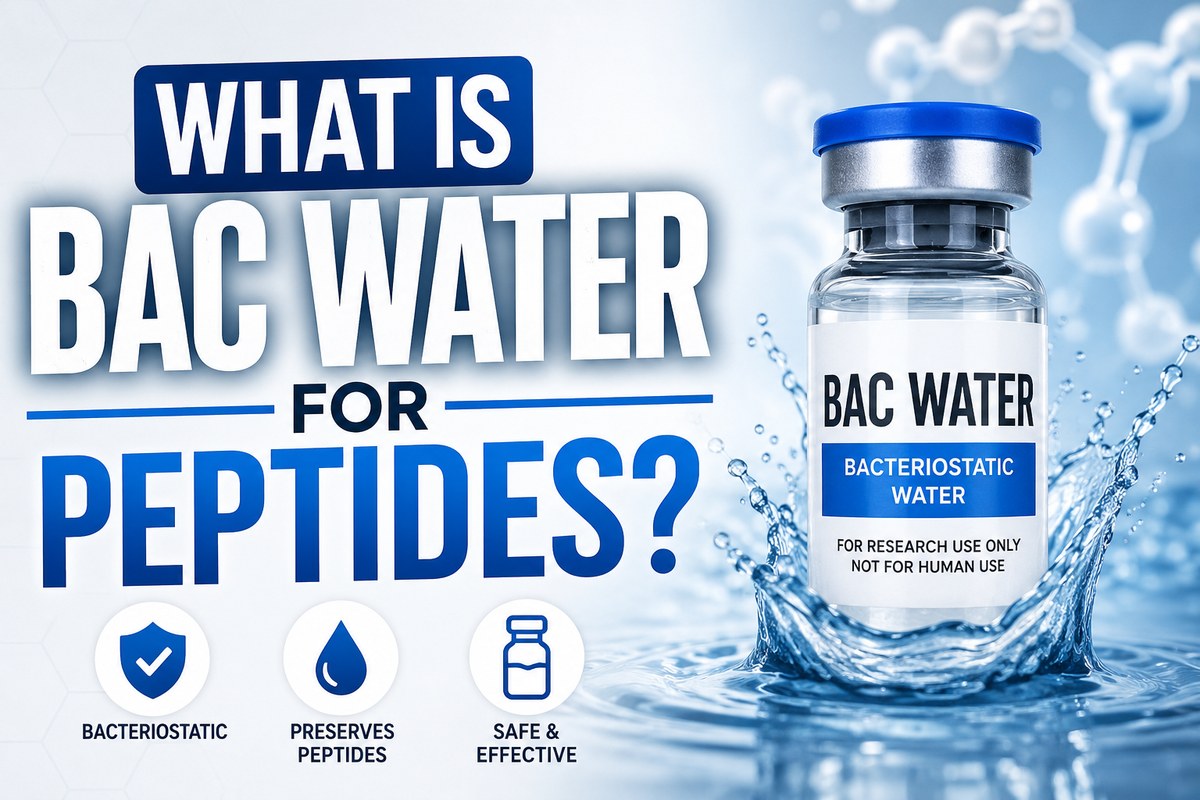
If you've been exploring peptides for more than five minutes, you've almost certainly come across the term BAC water. It came up in a forum thread. Someone in a comments section mentioned it. Maybe you found it listed alongside the peptide you were researching, without much explanation of what it actually is or why it matters.
Most sources assume you already know. This one doesn't.
BAC water is bacteriostatic water — and it's one of the most important, most overlooked details in the entire peptide reconstitution process. Getting it wrong doesn't just waste your peptide. It can create real safety risks. Getting it right is simple once you understand what you're dealing with.
This is that explanation.
What Is BAC Water, Exactly?
BAC water is sterile water with one addition: 0.9% benzyl alcohol (9 mg per mL), included as a bacteriostatic preservative. That's the entire formula — two ingredients.
The "bacteriostatic" part is the key. It means the benzyl alcohol doesn't kill bacteria outright (that would be bactericidal) — it prevents bacteria from reproducing. That distinction matters practically: it means that once you puncture the vial with a needle, the solution remains protected against microbial contamination across multiple draws over time.
Peptides arrive as a dry, freeze-dried (lyophilized) powder. They're manufactured this way because the powder form is dramatically more stable for shipping and storage. Before use, that powder needs to be dissolved back into liquid — a process called reconstitution. BAC water is what you use to do that.
The result is a clear solution that can be drawn from the same vial multiple times without introducing bacterial contamination, which is exactly what you need for a peptide protocol that involves repeated dosing over weeks.
A sealed, unopened vial of BAC water typically carries a shelf life of one to two years from manufacture. Once you puncture the stopper with a needle, the clock changes — more on that shortly.
A Brief History of BAC Water
BAC water didn't originate in the peptide space. It's a decades-old pharmaceutical staple with roots in mid-20th century hospital pharmacy.
The challenge pharmaceutical manufacturers faced was straightforward: injectable medications needed to be stored in multi-dose vials — meaning a single bottle would be accessed multiple times by multiple needles across a clinical setting. Every puncture introduces a potential contamination event. They needed a carrier liquid that could be accessed repeatedly without becoming a bacterial growth medium.
Benzyl alcohol emerged as the solution. It's a naturally occurring aromatic alcohol found in plants, fruit, and tea leaves, with a well-understood antimicrobial mechanism and low toxicity profile at appropriate concentrations. The 0.9% concentration became the USP (United States Pharmacopeia) standard after extensive pharmaceutical compatibility research dating back to the early 20th century.
Hospira — now a Pfizer subsidiary — became the benchmark manufacturer, producing the bacteriostatic water stocked in hospitals and clinics across the US and globally. The 30 mL multi-dose glass vial with a metal crimp seal is the format that set the standard the industry still uses today.
What's changed is who's using it. BAC water went from being a strictly clinical tool — handled by nurses reconstituting insulin or antibiotics — to a product that researchers and peptide users worldwide now work with as part of their reconstitution protocols. The product is identical. The context has widened.
What Happens If You Use Regular Water Instead?
This is the question that deserves a direct answer, because the temptation is real. You have a vial of peptide. You have no BAC water on hand. You have tap water, filtered water, or bottled water sitting right there. What actually happens if you use it?
Several things — none of them good.
Contamination, immediately. Regular water — tap, filtered, even bottled water that you consider "clean" — is not sterile. It contains microorganisms. The moment you introduce non-sterile water to a lyophilized peptide, you've created a contaminated solution. The peptide vial provides no protection against this.
No multi-dose safety. Even if you somehow sourced water that was sterile at the moment of mixing, without the 0.9% benzyl alcohol, there is nothing preventing bacterial growth after the first needle puncture. Every subsequent draw introduces new contamination risk. A solution reconstituted in plain sterile water should be considered single-use only — discard it after one draw, or you're introducing compounding contamination risk with each use.
Potential peptide degradation. The pH and purity profile of regular water are not controlled to pharmaceutical standards. BAC water sits in a pH range of 4.5 to 7.0, which is compatible with the vast majority of research peptides. Tap water pH varies significantly depending on your municipal supply, and its mineral content can interact with the peptide at a molecular level — accelerating degradation.
Pyrogens. This is the one that gets less attention but matters enormously. Pharmaceutical-grade BAC water is specified as non-pyrogenic, meaning it has been tested to contain no endotoxins — bacterial byproducts that cause fever and inflammatory responses when introduced to the body. Regular water has no such guarantee. Injecting a solution reconstituted in tap or unverified water creates serious risk.
The short version: regular water is not a substitute. Not tap. Not filtered. Not bottled spring water. Not "distilled" water from the supermarket. The combination of sterility, benzyl alcohol preservation, pH control, and pyrogen testing that defines pharmaceutical-grade BAC water cannot be replicated at home.
If you don't have BAC water, the right move is to wait until you do.
Where to Buy BAC Water
Here's the honest picture of how BAC water is actually sourced in 2026.
Chain pharmacies (CVS, Walgreens, Walmart, Boots) — almost always a dead end for walk-in purchase. These retailers don't reliably stock 30 mL multi-dose bacteriostatic water vials on consumer shelves. Staff are frequently unfamiliar with the product and often confuse it with sterile saline flushes, which are a completely different thing. Some locations can order it through their pharmacy system with a prescription, but it's not a reliable OTC option.
Independent and compounding pharmacies — a significantly better local option. Compounding pharmacies are set up to work with injectable-grade materials, and many either stock BAC water or can reliably order it. Call ahead and be specific: you want bacteriostatic water for injection, 0.9% benzyl alcohol, in a multi-dose vial. If you're working with a physician who prescribes peptide therapy, they can often facilitate this through their compounding pharmacy relationship.
Online specialist suppliers — where most people actually source it. Several dedicated peptide suppliers and research chemical vendors sell pharmaceutical-grade BAC water directly, typically in 10 mL or 30 mL vials, at $15–$30 per vial depending on size and source. The advantage here is both accessibility and documentation: reputable online suppliers publish Certificates of Analysis (COA) showing the benzyl alcohol concentration, endotoxin levels, and sterility testing results.
What to verify before buying, regardless of source: - Confirmed 0.9% benzyl alcohol (not "trace" or unspecified amounts) - USP Water for Injection as the base — not tap, not distilled consumer water - Non-pyrogenic / endotoxin tested (the COA should specify below 0.25 EU/mL) - Glass multi-dose vial with metal crimp seal — not soft plastic containers - A clear manufacturer name and batch documentation
The Amazon warning: Amazon listings for "bacteriostatic water" or "reconstitution solution" are inconsistent at best. Some are legitimate; others are mislabeled saline solutions or products lacking the required benzyl alcohol concentration entirely. The marketplace offers no quality guarantee, and the consequences of using substandard BAC water on an expensive peptide are significant. If you buy through a marketplace, verify the COA before anything touches your peptide.
How Long Does BAC Water Stay Safe in Your Refrigerator?
Two numbers matter here, and they're often confused.
Sealed, unopened vial: Manufacturer-specified shelf life is typically one to two years from production when stored correctly — away from light, at room temperature or refrigerated, not frozen.
After first puncture: 28 days. This is the USP standard. Once you've inserted a needle into the stopper, the 28-day clock starts. The benzyl alcohol continues to inhibit bacterial growth, but the protective integrity of the sealed vial is now compromised. Beyond 28 days after first puncture, discard the vial — even if it looks fine. You can't visually confirm bacterial contamination.
A few practical storage rules that are worth knowing:
The reconstituted peptide solution (the BAC water + dissolved peptide) should be kept in the refrigerator at 2–8°C and used within approximately 28 days. Peptide stability once dissolved varies by compound, but this is the general guideline.
Do not freeze a reconstituted peptide. The freeze-thaw process can disrupt the peptide's molecular structure and cause aggregation — clumping at a level that can't be seen but affects the compound's integrity. Your lyophilized (dry) peptide can be stored in a freezer for long-term keeping. Once it's been reconstituted in BAC water, refrigerator only.
Do not shake the vial. Mechanical agitation can denature the peptide — breaking down its structural integrity through physical stress. Gently swirl or roll the vial between your hands until the powder dissolves. It should go clear. If it doesn't fully dissolve, let it sit for a few minutes at room temperature before checking again.
Keep vials out of direct light. Both the BAC water and the reconstituted solution should be protected from light exposure, which can accelerate degradation.
Common Myths About BAC Water
The peptide community generates a lot of misinformation around BAC water. Here are the most persistent myths, corrected.
"BAC water and sterile saline are the same thing." They're not. Bacteriostatic saline (0.9% NaCl + 0.9% benzyl alcohol) and bacteriostatic water (water + 0.9% benzyl alcohol, no salt) are different products. Some peptides are sensitive to saline. Unless you've confirmed your peptide is compatible with a saline carrier, BAC water is the default choice.
"You can make your own BAC water at home." You cannot replicate USP-grade BAC water at home. Home production cannot achieve pharmaceutical sterility, cannot verify endotoxin levels, and cannot ensure the benzyl alcohol concentration is accurate. Even the most careful home attempt introduces contamination risk that defeats the entire purpose of using BAC water in the first place.
"More benzyl alcohol = better preservation." The 0.9% concentration is the standard because it works — and because it's the concentration that's been tested for compatibility with injected compounds. Higher concentrations of benzyl alcohol are not more protective; they're potentially damaging to peptide structure and more irritating to tissue.
"Any clear water will do if I can't find BAC water." Covered above, but worth repeating: this is the most consequential misconception. Clear does not mean sterile. Clear does not mean safe to inject. Clear does not mean free of pyrogens.
"The 28-day rule is conservative — the vial is fine for months." The 28-day window isn't pharmaceutical caution theater. It reflects the actual protective limit of the benzyl alcohol preservative under real-world use conditions, accounting for repeated needle punctures. After 28 days from first use, discard the vial.
"BAC water is just for peptides." It predates the peptide market by decades. BAC water is the standard carrier for reconstituting many injectable medications across clinical settings — insulin, certain antibiotics, hormone preparations. Peptides are just the most recent application of a very well-established pharmaceutical tool.
The Short Version
BAC water is the non-negotiable starting point for any peptide reconstitution. Two ingredients — pharmaceutical-grade sterile water and 0.9% benzyl alcohol — give you a carrier that protects your peptide from contamination across multiple draws over 28 days. It's not an accessory. It's the foundation.
Regular water of any kind is not a substitute. Chain pharmacies are an unreliable source. Reputable online suppliers with published COAs are the practical route for most people.
Once you've got your BAC water sorted, the reconstitution process itself is simple: inject the BAC water gently into the peptide vial at an angle, swirl slowly until clear, refrigerate at 2–8°C, and use within 28 days. That's it.
The peptide space can feel technical at first — a lot of terminology, a lot of specifics that seem to matter. BAC water is one of the places where the specifics genuinely do matter. Now you know why.
Disclaimer: This article is for educational purposes only and does not constitute medical advice. Peptides are sold as research compounds. Consult a qualified healthcare professional before beginning any supplementation or reconstitution protocol. For research use only.